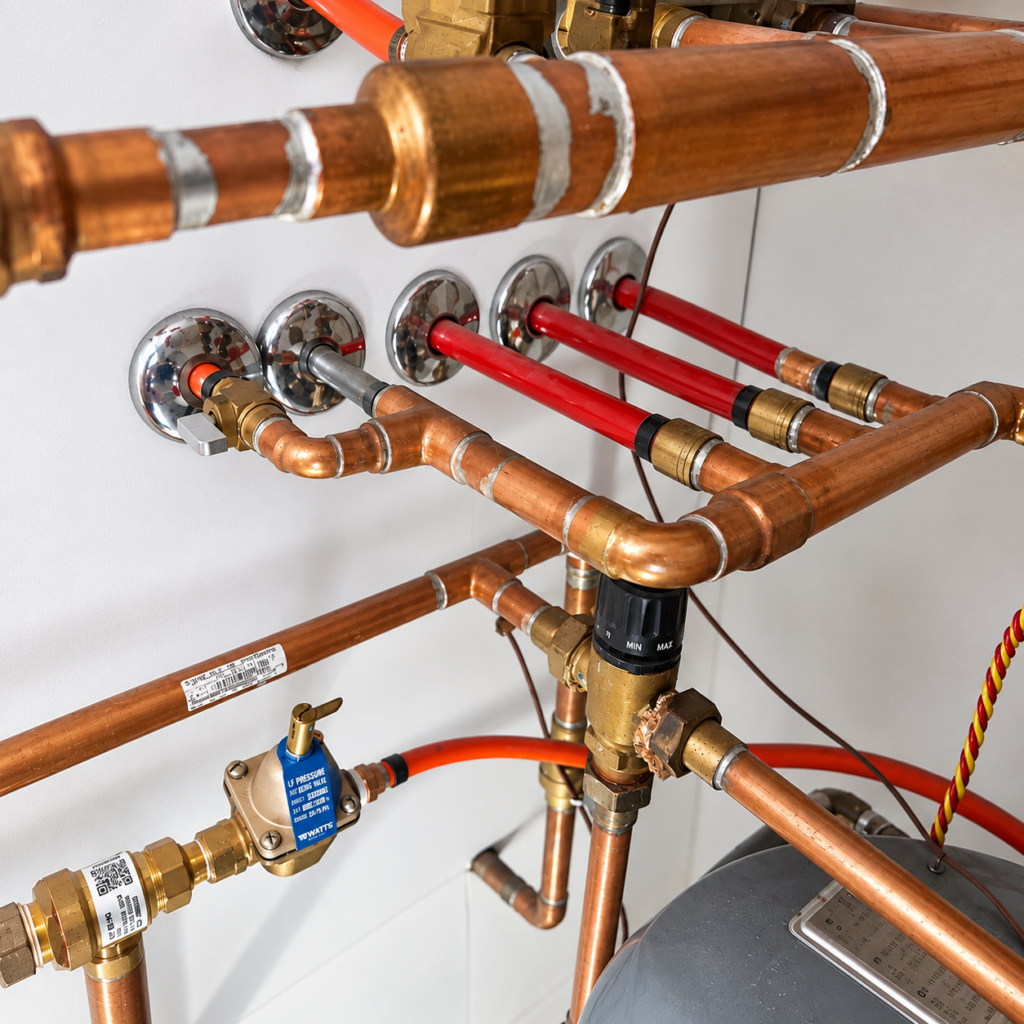
If a boiler system’s copper pipes are left exposed and unprotected before winter, they can freeze and burst when temperatures drop. Water expands as it freezes, and copper has no give. The result is cracked or completely blown pipe sections that can take out an entire hydronic heating system overnight.
We recently got a call from a contractor working on a fire-restoration project in the Greenwood Village, CO area. The home had a boiler already in place, but the previous installer never properly weatherproofed the copper piping. One winter later, every pipe in the system had blown. The whole thing had to be demoed and rebuilt from scratch.
It’s a costly, avoidable situation. And it happens more often than most homeowners realize. At Jump HVAC, we see freeze damage to boiler systems every single winter across the greater Colorado region.
Why Do Copper Pipes Burst in a Boiler System?
Copper pipes burst because water trapped inside expands with enough force to split the pipe when it freezes. This is basic physics, but the consequences are anything but basic. A single freeze event can destroy dozens of feet of piping, fittings, and connections throughout a hydronic system.
Hydronic heating systems are especially vulnerable because water is always present in the lines. If the boiler loses power, runs out of fuel, or is shut down improperly before a cold snap, that standing water has nowhere to go. Pipes in exterior walls, crawl spaces, garages, or any area without adequate insulation are the first to go.
What Are the Warning Signs That Pipes May Have Already Frozen or Been Damaged?
If your boiler system isn’t heating evenly, is losing pressure, or you notice wet spots near pipe runs, freeze damage may already be present. Here are the most common signs to watch for:
- Low or dropping system pressure on the boiler gauge
- Visible water stains, drips, or pooling near pipe runs
- Radiators or floor zones that stopped producing heat
- Unusual banging or hissing sounds from the system
- The boiler fires but the building doesn’t heat up
Any one of these symptoms warrants a professional inspection. Learn more about what a full system checkup involves on our boiler repair page.
How Do You Properly Weatherproof a Boiler System’s Copper Piping?
Proper weatherproofing combines insulation, system winterization, and making sure the boiler stays operational through cold spells. There’s no single fix. It’s a layered approach.
Here’s what should be in place before temperatures drop:
- Insulate all exposed pipe runs with foam pipe insulation, especially in unheated spaces like garages, crawl spaces, and exterior walls
- Verify the boiler stays powered and set to a minimum temperature even when the space is unoccupied
- Bleed and flush the system before winter to clear any air pockets or sediment that can reduce flow and create freeze-prone dead zones
- Check the pressure relief valve and expansion tank so the system can handle thermal expansion correctly
- Have a pro inspect pipe runs in vulnerable areas before the first hard freeze
Our team at Jump HVAC has worked on boiler systems across a wide range of property types, from residential homes to large restoration projects. We know where freeze damage tends to hide.
Frequently Asked Questions
Can I use antifreeze in my boiler system to prevent freeze damage?
Yes, some hydronic systems can use a propylene glycol and water mix as a freeze-protection measure. However, this needs to be sized and installed correctly for your specific system. Using the wrong type or concentration can damage components or void equipment warranties. Always consult a qualified technician before adding antifreeze to a boiler system.
If my pipes already burst over winter, do I have to replace the entire boiler system?
Not necessarily. The boiler unit itself may be fine. In many cases, the damage is limited to the pipe runs, fittings, and connections rather than the boiler itself. A thorough inspection will identify exactly what needs to be replaced so you’re not spending more than necessary.
How often should a boiler system be serviced to prevent this kind of damage?
We recommend at least one professional service visit per year, ideally in the fall before heating season begins. Catching small issues like micro-leaks, inadequate insulation, or failing components before winter hits can save a significant amount of time and expense down the road.
Don’t Let One Colorado Winter Wipe Out Your Boiler System
Freeze damage to copper piping is one of the most preventable HVAC problems we deal with, but only if you act before temperatures drop. If your boiler system hasn’t been inspected recently, or if you’re dealing with the aftermath of a hard winter, we’re here to help.
Homeowners and contractors throughout the Greenwood Village, CO area trust Jump HVAC to get boiler systems back online and keep them protected year after year. Contact us today to schedule an inspection or get a quote on repairs.